

Businesses in Singapore are feeling the pressure to innovate, but sifting through the explosion of AI tools can feel overwhelming. Many local businesses, from bustling F&B outlets in Orchard to precision manufacturers in Jurong, struggle to identify which AI solutions will genuinely propel them forward rather than just adding another subscription.
When Investing in AI Tools Makes Strategic Sense for Singapore Businesses
The core business problem that AI tools address isn’t about technology; it’s about efficiency, competitive advantage, and customer engagement. For many Singapore SMEs, the constant challenge lies in doing more with less, optimising limited resources, and keeping pace with rapidly evolving consumer expectations. AI offers a powerful answer to these pressures by automating repetitive tasks, providing deeper insights from data, and enabling hyper-personalisation.
Consider a retail business in the Singapore CBD struggling with inventory management and fluctuating customer demand. An AI-driven forecasting tool can predict sales trends with greater accuracy, reducing overstocking or stockouts. Similarly, AI tools can streamline aspects of their digital marketing Singapore efforts, enhance customer service through chatbots, or even revolutionise inventory management for manufacturers. For instance, a local e-commerce brand based in Tampines could leverage AI to personalise product recommendations, significantly boosting conversion rates and overall performance marketing Singapore outcomes. The strategic imperative for adopting AI becomes clear when it directly addresses a critical pain point or unlocks a new avenue for growth.
Key Evaluation Factors for Selecting AI Solutions
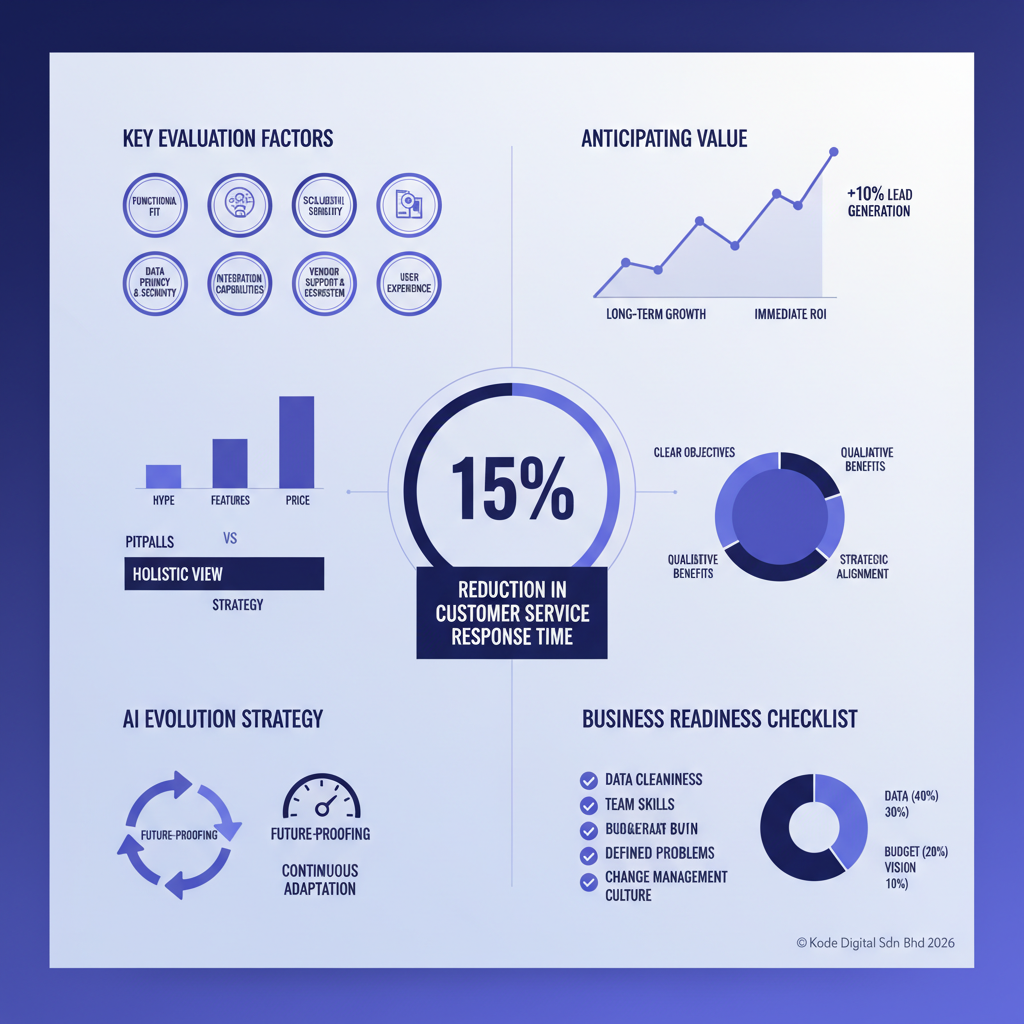
Choosing the right AI tool is less about picking the flashiest technology and more about a rigorous evaluation process that aligns with your specific operational needs. Where businesses often go wrong is in making decisions based on hype, feature lists, or the lowest price point, rather than a holistic understanding of their true requirements and long-term vision. This can lead to costly integrations, underutilised software, or even data privacy issues.
To avoid these pitfalls when embracing AI marketing Singapore solutions or operational AI, consider these key evaluation factors:
- Functional Fit: Does the tool solve a defined problem for your business? A content generation AI is great, but does it produce content that aligns with your brand voice and improves content strategies and SEO services Singapore?
- Scalability: Can the tool grow with your business? As your data volume increases or your user base expands, will the AI solution maintain performance and offer cost-effective scaling?
- Data Privacy & Security: This is paramount in Singapore. Ensure the tool complies with local data protection regulations, such as the PDPA. Understand where your data is stored, how it’s used, and the vendor’s security protocols.
- Integration Capabilities: Can the AI tool seamlessly integrate with your existing CRM, ERP, or marketing automation platforms? Siloed tools create more work, not less.
- Vendor Support & Ecosystem: Evaluate the vendor’s reliability, support channels, and commitment to ongoing development. A strong community or robust support ensures you can maximise the tool’s potential. For those targeting specific enhancements, seeking an expert SEO agency Singapore might be a key step.
- User Experience: Is the interface intuitive? Will your team adopt it easily, or will it require extensive, ongoing training?
Anticipating the Value: Beyond Immediate ROI for Singapore SMEs
While Return on Investment (ROI) is crucial, evaluating AI tools requires looking beyond immediate monetary gains. For many Singapore SMEs, the value derived from AI might manifest in less tangible but equally impactful areas like improved decision-making, enhanced customer loyalty, or a more engaged workforce. Setting realistic expectations and identifying diverse metrics for success are vital.
To anticipate the true value, consider this framework:
- Define Clear, Measurable Objectives: Before adopting any tool, articulate what success looks like. Is it a 15% reduction in customer service response time? A 10% increase in lead generation? More efficient workflows for your content marketing Singapore team?
- Pilot Program with Focused Scope: Don’t roll out a new AI tool across your entire operation without testing. Implement a pilot program in a specific department or for a defined task. This allows you to gather real-world data on performance, identify kinks, and make adjustments without disrupting core business functions.
- Assess Qualitative Benefits: Look at improvements in employee morale, reduction in staff burnout from repetitive tasks, better quality of output, or faster access to critical business intelligence. These indirect benefits can significantly impact long-term productivity and innovation.
- Long-Term Strategic Alignment: Does the AI tool support your overarching business strategy for the next 3-5 years? Is it enabling new capabilities or strengthening your competitive position in the Singapore market?
- Customer Experience Enhancements: Evaluate how the AI tool indirectly or directly improves your customers’ journey. Personalised experiences, faster support, and more relevant offerings all contribute to loyalty and brand perception. Consider partnering with a knowledgeable digital agency Singapore to help identify these areas.
By considering this broader spectrum of value, you can make a more informed decision that truly benefits your business.
How AI’s Rapid Evolution Changes Your Tool Selection Strategy
The AI landscape is not static; it’s an incredibly dynamic ecosystem of innovation. Generative AI, advanced machine learning models, and new automation capabilities emerge almost daily. This rapid evolution fundamentally alters how Singapore businesses should approach tool selection, moving away from a ‘set and forget’ mentality to one of continuous evaluation and adaptation.
What does this mean for your strategy?
- Agility is Key: Prioritise tools that offer flexibility and integration with other platforms, allowing you to swap out or add new components as the technology advances.
- Future-Proofing Features: Look for tools developed with open APIs, modular architectures, and a clear roadmap for future innovation. Can it integrate with emerging AI standards?
- Focus on Core Capabilities, Not Just Features: Understand the underlying AI models and their capabilities. A tool might offer a specific feature today, but a robust core capability means it can adapt to deliver new features tomorrow.
- Stay Informed: Regularly review industry trends and IMDA initiatives. What’s cutting edge today might be standard practice for optimising social media marketing Singapore campaigns tomorrow. Keep an eye on new AI advancements that promise to boost efficiency in areas from content generation to web design Singapore.
Your AI tool selection should be an ongoing process, not a one-time decision. Embrace learning and be prepared to adapt your stack as better, more efficient, or more secure solutions become available.
Assessing Your Business’s Readiness for AI Adoption
Before committing to an AI tool, it’s crucial to honestly assess your internal readiness. A brilliant AI solution will fail if your business lacks the foundational elements to support it. This isn’t just about budget; it’s about data, skills, culture, and leadership vision.
Use this checklist to gauge your readiness:
- Data Cleanliness & Accessibility: Do you have clean, structured, and accessible data? AI models feed on data, and “garbage in, garbage out” applies here more than ever.
- Internal Team Skills: Does your team possess the skills to manage, interpret, and leverage AI tools, or do you have a plan to upskill them? This might involve training, hiring new talent, or choosing to partner with a trusted digital marketing agency Singapore.
- Budget Allocation: Beyond the initial software cost, have you budgeted for implementation, training, potential customisation, and ongoing maintenance?
- Leadership Buy-in & Vision: Is there clear support from leadership for AI adoption? A strategic vision helps align teams and resources.
- Defined Problem Statements: Do you have specific problems that AI is intended to solve, rather than just adopting AI for the sake of it? This clarity guides tool selection and ensures measurable outcomes, such as better targeting for Google Ads Singapore.
- Change Management Culture: Is your organisation open to process changes and new ways of working? AI often requires rethinking workflows, which needs cultural adaptability.
Navigating the complex world of AI tools can seem daunting, but with a strategic approach, Singapore businesses can transform this challenge into a profound opportunity. By carefully evaluating options, understanding the dynamic nature of AI, and ensuring internal readiness, you can make informed choices that drive efficiency, foster innovation, and secure a competitive edge in today’s digital economy. The future is intelligent, and with the right tools, your business can be too.
Please note that regulations and technological capabilities are subject to change, and businesses should consult official guidelines and professional advice specific to their operations.
